
Content Marketing Examples That Actually Move Revenue
Copy the mechanic, not the brand: that’s the one rule separating marketers who get real results from a content marketing example and marketers who just admire it. The strongest content marketing examples share a repeatable pattern: one core format, a distribution plan built before the content exists, and a measurement point that ties the work to a business outcome. Nike’s video storytelling, GoPro’s user-generated content engine, HubSpot’s pillar pages, and Airbnb’s structured city guides look different on the surface, but each one follows that same three-part structure.
Here’s a shortlist you can act on this week:
- A live event plus a downloadable reference asset. A 3-part webinar series built around a Kubernetes GPU topic generated 6,632 ebook form views and 1,963 submissions, a 29.6% conversion rate. Copy it small by pairing one 30-minute webinar with a 10-page checklist; copy it at enterprise scale by running a 3-part series feeding a full research report.
- User-generated video content with a branded hashtag. GoPro’s entire content engine runs on customer footage. A solo operator can repost customer photos weekly; a mid-market team can run a quarterly video contest with a modest prize budget.
- A structured, AI-discoverable resource hub. Airbnb rebuilt city-guide pages with clear entities and structure, pushing its AI mention rate from near-zero to over 7% in under two months. Any business can start with five FAQ-rich pages answering the exact questions customers type into ChatGPT.
- Founder-voice long-form storytelling. Nike and Red Bull built brand loyalty on narrative, not product specs. A small business can replicate this with a monthly founder newsletter instead of a global ad campaign.
- A humor-driven launch video. Dollar Shave Club’s original launch film proved that personality beats production budget. A $500 smartphone video with a strong script can outperform a $50,000 shoot with no point of view.
What makes these repeatable isn’t luck. It’s three things every one of them shares: a format matched to the audience’s habits, a distribution plan that existed before launch day, and a specific metric someone tracked from day one.
Key Takeaways
The strongest content marketing examples succeed because they pair one clear format with a distribution plan and a measurable outcome, not because of budget size.
| Point | Details |
|---|---|
| Start with one format | Pick a single mechanic, like user-generated video or a structured FAQ hub, and run it for at least eight weeks. |
| Pair an event with a reference asset | Webinar-plus-ebook programs can produce conversion rates near 29.6%, as shown in the LearnKube case. |
| Structure content for AI discovery | Direct answers, named contributors, and third-party citations raise your odds of being cited by AI tools. |
| Expect a six to eight month timeline | Median time to positive ROI runs roughly six to eight months, so judge results after that window, not before. |
| Get professional help executing | Tatemweb builds AI-structured websites and content programs that turn these examples into measurable campaigns. |
Table of Contents
- Content Marketing Examples Worth Studying and Copying
- Which Content Format Fits Which Goal?
- How to Choose Which Example to Model
- Building an E-E-A-T Framework That Actually Gets Measured
- What I’ve Learned Watching Small Teams Try to Copy Big Brands
- Let Tatemweb Turn These Examples Into Your Own Program
- Sources
- FAQ
Content Marketing Examples Worth Studying and Copying
The eight examples below aren’t inspirational for their production value. They’re useful because each one demonstrates a mechanic you can extract, shrink, and apply regardless of your budget. Read them as case studies, not highlight reels.
1. Red Bull: Content as a media company, not a marketing department
Red Bull doesn’t market energy drinks. It runs Red Bull Media House, a content operation that produces extreme sports documentaries, a magazine, and event coverage that rarely mentions the product directly. The format is video and long-form editorial; the distribution is owned channels plus syndication deals with broadcasters.

Why it worked: Red Bull built an audience around a lifestyle before asking that audience to buy anything. The content earns attention on its own merit, which means it gets shared without a paid boost.
How to copy it at smaller scale: You don’t need a media division. A regional HVAC company can run a monthly YouTube series on home energy efficiency that never pitches a service call. A law firm can publish short explainer videos on local court procedures. The mechanic is the same: build authority in a topic adjacent to your product before you ask for the sale.
2. HubSpot: Pillar content that compounds for years
HubSpot’s marketing blog and resource library function as a pillar-and-cluster system. One deep guide on a topic like email marketing links out to dozens of supporting posts, and each supporting post links back. The format is blog plus downloadable templates and certifications.
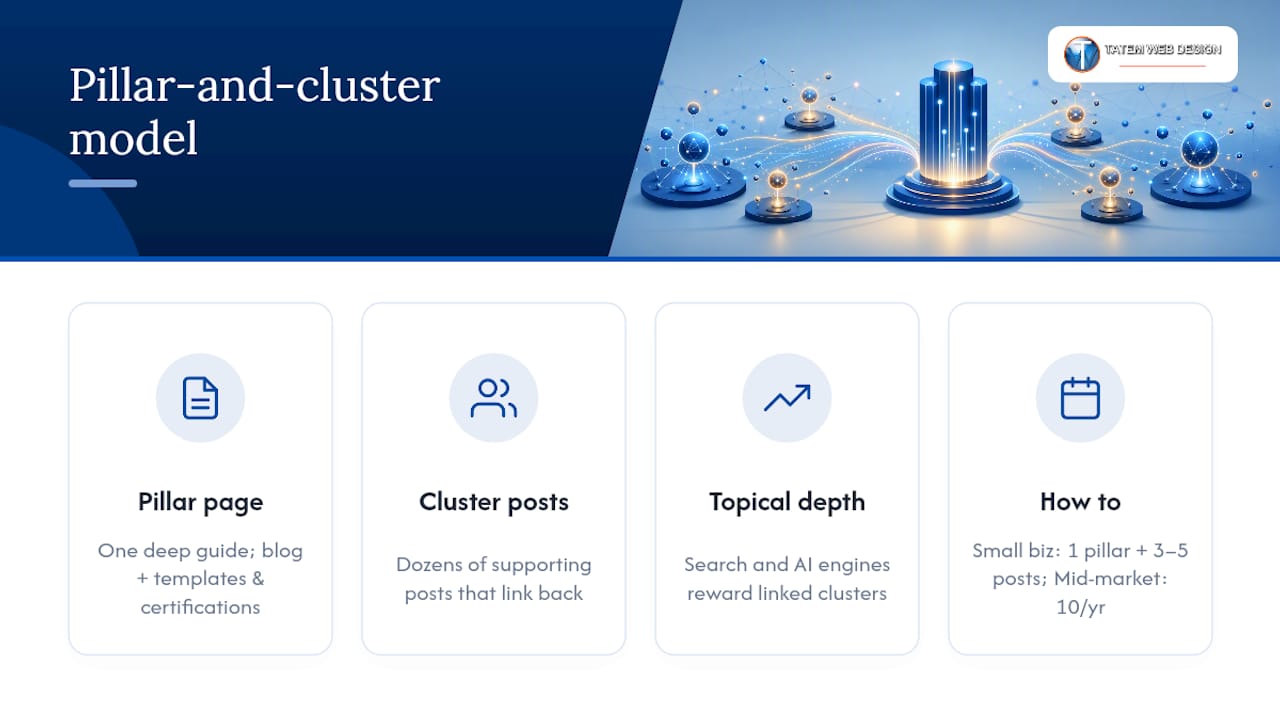
Why it worked: Search engines and, increasingly, AI answer engines reward topical depth. A tightly linked cluster of pages signals expertise better than isolated posts ever could.
How to copy it: A small business starts with one pillar page on its core service and three to five supporting posts that answer specific customer questions. A mid-market team builds ten pillar clusters over a year, each anchored by original research or a template readers actually download.
3. GoPro: Customers as the production team
GoPro rarely shoots its own hero content. Instead, it curates footage submitted by customers who use the camera to capture surfing, skydiving, and mountain biking. The format is short-form video distributed heavily on YouTube and Instagram.

Why it worked: User-generated content carries built-in credibility, and it costs a fraction of a traditional shoot. Every submission is also free proof that the product performs as advertised.
How to copy it: A restaurant can repost customer food photos with a branded hashtag every week at zero production cost. A fitness studio can run a monthly “transformation” video contest. The checklist for a two-person marketing team: pick a hashtag, seed it with five staff posts, and repost weekly for eight weeks before judging results.
4. Airbnb: Structured content built for how people actually search now
Airbnb rebuilt its city-guide and experience pages with clear structure, specific entities, and answers to the exact questions travelers ask. This work raised its AI mention rate from near-zero to more than 7% on target queries in under two months, built on more than 50 structured hub pages plus targeted outreach to publishers that AI models cite as sources.
Why it worked: AI answer engines pull from pages with clean structure and third-party validation, not just keyword density. Airbnb treated discoverability as an on-site and off-site problem simultaneously.
How to copy it: A dentist’s office can build five FAQ pages answering the specific questions patients ask before booking, written in plain language with clear headers. A larger practice can pair that with outreach to local health directories and review sites that AI tools already cite. Pro Tip: Write your FAQ answers the way you’d answer a patient on the phone, not the way you’d write ad copy. AI answer engines extract direct, plainly stated answers far more reliably than marketing language.
5. Coca-Cola: Personalization at a global scale
The “Share a Coke” campaign printed common first names on bottles and turned a mass-produced product into something that felt personal. The format was packaging plus social sharing; the distribution ran through retail, out-of-home advertising, and user-generated social posts.
Why it worked: It gave millions of people a reason to photograph a soda bottle and post it, turning packaging into a content engine.
How to copy it: A local bakery can personalize order confirmations with a customer’s name and a shareable graphic. A subscription box service can add a personalized note card designed to be photographed. Small teams don’t need a print run of millions. They need one detail that makes a customer feel individually recognized.
6. Nike: Narrative over product specs
Nike’s advertising rarely leads with shoe technology. It leads with athletes overcoming obstacles. The format spans video, social campaigns, and app-based content tied to its training platform.

Why it worked: People remember stories longer than they remember specifications, and a strong narrative travels across formats without losing impact.
How to copy it: A contractor can feature a real customer’s home renovation story instead of a list of materials used. A financial advisor can publish a short video about a client’s retirement milestone (with permission) instead of a rate sheet. The checklist: find one real customer story, script it in under 90 seconds, and distribute it on the channel where your audience already spends time.
7. Dollar Shave Club: A launch video that beat its budget by 100x
Dollar Shave Club’s original launch video cost roughly $4,500 to produce and became one of the most cited direct-to-consumer origin stories in marketing. The format was a single comedic video distributed almost entirely through organic sharing and a modest paid push.
Why it worked: The script had a clear point of view and didn’t try to look expensive. It sounded like a person talking, not a brand presenting.
How to copy it: A small e-commerce brand doesn’t need a viral hit to benefit from this mechanic. Write a script with an actual opinion about the problem you solve, film it on a phone, and skip the polished voiceover. The goal is a distinct voice, not production value.
8. Lego: A content ecosystem instead of a single campaign
Lego runs movies, a magazine, an ideas platform where fans submit set designs, and a YouTube channel with build tutorials. The format mix spans video, print, interactive submissions, and community content.
Why it worked: Lego turned its audience into co-creators. Fans who submit set ideas on Lego Ideas become invested in the brand’s success, not just its products.
How to copy it: A software company can run a feature-request community board instead of a suggestion box buried in settings. A local nonprofit can invite supporters to submit stories for a newsletter feature. The checklist for a two-person team: pick one channel for community submissions, commit to featuring one submission a month, and promote the feature publicly.
Which Content Format Fits Which Goal?
Every example above depends on matching a format to a specific job. A format that drives brand awareness rarely drives conversions the same way, and picking the wrong one wastes a good idea.
| Format | Best use case | Audience fit | Quick repurposing path |
|---|---|---|---|
| Blog / pillar page | Organic discovery, product education | B2B and niche communities | Split into 3 to 5 social posts and one email |
| Video (short-form) | Brand awareness, product demos | B2C, younger audiences | Cut into stills for social and blog embeds |
| Newsletter | Retention, nurture | B2B and B2C alike | Recombine top sections into a quarterly roundup post |
| Podcast | Retention, thought leadership | B2B and niche communities | Transcribe into blog posts and pull audio clips for social |
| Webinar | Lead generation | B2B, higher-consideration purchases | Turn the recording into an on-demand gated asset and a highlight reel |
| Ebook / original research | Lead generation, authority building | B2B, niche communities | Break into a blog series and a slide deck for social |
| Interactive content (quizzes, calculators) | Lead generation, product education | B2C and B2B alike | Extract results data into a benchmark report |
| Social (organic) | Brand awareness, community | B2C, niche communities | Repost top performers as blog examples or case studies |
A few production notes worth acting on before you pick a format:
- Webinars produce the highest single-session conversion rate on this list when paired with a downloadable asset, based on the Kubernetes GPU webinar case study showing a 29.6% ebook conversion rate.
- Original research and detailed guides get cited more often by AI answer engines than short social posts, because structured, entity-rich content earns third-party consensus that thinner content doesn’t.
- Newsletters remain the cheapest retention format to maintain, since the production cost is writing time rather than video editing or event logistics.
Pro Tip: Build one deep asset, like an original research report or a detailed guide, and treat it as raw material for a month of content. One report becomes five blog posts, one webinar, ten social captions, and a newsletter series. This is exactly how the LearnKube webinar-plus-ebook program stretched a single topic into a sustained lead-generation program instead of a one-off event.
DesignRush’s catalog of content marketing formats shows the same pattern across industries: businesses that win rarely invent a new format. They execute an existing one with more discipline than competitors.
How to Choose Which Example to Model
Picking the right content marketing example to copy isn’t about which one impressed you most. It’s about matching the mechanic to your goal, your team’s capacity, and how quickly you need results.
- Define the single goal this quarter. Brand awareness, lead generation, retention, and product education call for different formats. Trying to do all four with one campaign is why so many content programs stall.
- Check your audience’s actual habits. A B2B buyer researching a five-figure purchase behaves nothing like a consumer scrolling Instagram. Match the format to where your buyer already spends attention, not where you’d prefer they spend it.
- Score your capacity honestly. A solo marketer can’t run a Lego-style content ecosystem. Pick one format you can sustain for at least eight weeks before judging results.
- Weigh your risk tolerance. A comedic launch video in the Dollar Shave Club style can flop publicly. A structured FAQ hub in the Airbnb style carries almost no reputational risk. Choose accordingly if your brand can’t afford a misstep.
- Set a realistic time-to-value. Some formats show signal in weeks; others take months. Plan your first checkpoint around the format’s natural timeline, not an arbitrary internal deadline.
Adaptation paths look different depending on team size:
- Solo operator or freelancer: Pick one format, one distribution channel, and run it for six weeks minimum. A weekly customer-story post on one platform, following the Nike mechanic, is a realistic minimum viable output.
- Small team (2 to 5 people): Combine two formats, such as a blog pillar page plus a short video series, over an eight-week sprint. Assign one person to distribution so content doesn’t sit unpublished.
- Mid-market team: Run a quarter-long program combining an original research asset, a webinar series, and supporting blog content, following the structure that generated 1,963 ebook leads in the LearnKube case. Budget 10 to 12 weeks from research to first measurable lead.
On cost and effort allocation: original research, detailed case studies, and live webinars consistently outperform gated whitepapers with no original data behind them. If your team is currently investing in a downloadable PDF that repackages public information, redirect that budget toward an original survey, a customer interview series, or a live event instead. Small business content strategies built around original insight, not recycled advice, consistently earn more attention and more shares.
Building an E-E-A-T Framework That Actually Gets Measured
Experience, Expertise, Authoritativeness, and Trustworthiness (E-E-A-T) started as Google’s shorthand for judging content quality, but it now maps almost directly onto what makes content citable by AI answer engines too. The Content Marketing Institute’s 2026 research makes a pointed argument here: prioritize your content operating model, meaning strategy, governance, and distribution, before you chase AI features or tools. Copying a brand’s AI tactics without fixing your own structure and consistency wastes the effort.
Here’s how the four E-E-A-T pillars translate into a six-week execution sprint:
- Experience: Assign a named contributor with real, verifiable experience to write or be interviewed for each major piece. A generic “Team” byline signals nothing to a reader or an AI crawler.
- Expertise: Include one piece of original data, a customer survey, an internal benchmark, or a case study result, in every cornerstone asset produced during the sprint.
- Authoritativeness: Earn or request third-party citations and mentions, the same tactic behind Airbnb’s mention-rate jump, by pitching your original research to relevant publishers and directories.
- Trustworthiness: Add structured FAQs, clear sourcing, and schema markup so both search engines and AI models can extract clean, direct answers from your pages.
Measurement matters as much as production. Track lead quality (not just lead volume) in your CRM, monitor conversion rate on gated assets in GA4, and check AI inclusion or mention rate by testing your target queries directly in tools like ChatGPT or Perplexity every few weeks. Croud’s work with Thorne shows the payoff of tying these metrics together: linking AI discovery work to commercial KPIs produced a 30% year-over-year increase in organic revenue, proof that AI visibility work isn’t just a vanity metric when it’s measured against revenue.
Pro Tip: Improve your odds of being cited by AI answer engines by writing the answer to a question in the first two sentences of a section, then expanding with supporting detail. AI models extract direct answers far more reliably from that structure than from a slow narrative buildup.
A benchmark worth internalizing before you judge any of this too early: 91% of organizations already use content marketing, but only about 59% rate their own programs as even somewhat effective, and the median time to positive ROI runs roughly six to eight months. Most programs that look like failures at month three simply haven’t hit their measurement window yet.
What I’ve Learned Watching Small Teams Try to Copy Big Brands
The biggest mistake I see isn’t a lack of creativity. It’s teams copying a brand’s tone instead of its mechanic. A local business trying to sound like Nike with a five-figure budget looks awkward, because the story only works at Nike’s scale of cultural reach. The mechanic underneath, real customer narrative over product specs, works at any budget. Copy that instead.
The second mistake is treating a content program like a campaign with an end date. Given that median time to positive ROI runs six to eight months, a business that quits after week eight because the newsletter “isn’t working” was never going to see results in the first place. Persistence isn’t a virtue here so much as a mathematical requirement.
A few patterns show up again and again in programs that stall:
- Abandoning a format around month four or five, right before the data would start to show a trend.
- Gating every asset behind a form, which kills the organic sharing that made examples like Dollar Shave Club’s launch video work in the first place.
- Skipping distribution planning entirely, assuming good content will surface itself without a channel strategy built before publish day.
- Chasing an AI tool or tactic before fixing basic structure, governance, and consistency, exactly the trap CMI’s research warns against.
The teams that get this right treat structure as a discipline, not an afterthought. A page that answers a real customer question directly, with a named contributor and one piece of original data behind it, will outperform a polished but generic page every time, whether the reader is a person or an AI model summarizing search results for one.
Let Tatemweb Turn These Examples Into Your Own Program
Tatemweb gets you from “we love the GoPro example” to a running program faster than piecing it together in-house, because content structure and AI discoverability are built into the website from day one instead of bolted on later. A generic web build leaves you retrofitting FAQ schema and structured data months after launch; an AI-driven website build bakes that structure in from the first page, the same kind of on-site groundwork behind Airbnb’s mention-rate jump.
Our services line up directly with the examples covered here:
- AI website design that structures pages for both search engines and AI answer engines
- Content writing services for cornerstone assets, blog clusters, and case studies
- AI email marketing integration for nurture sequences that extend a webinar or ebook launch
- Measurement setup so you can track lead quality and conversion, not just traffic
If you’re a Florida business owner ready to turn one of these examples into a working program instead of a bookmarked article, call Tatemweb at 772-224-8118 or visit our AI website design page to schedule a consultation and map out your first six-week sprint.
Sources
- B2B Content and Marketing Trends: Insights for 2026 — Content Marketing Institute
- 67 B2B content marketing statistics for 2026 — Marketful
- How a 3-part Kubernetes GPU webinar series generated 1,963 ebook leads — LearnKube
- How Thorne used AI discovery intelligence to grow organic revenue 30% year over year — The Drum
- How Airbnb went from invisible in AI search to 7% mention rate in under 2 months with Offsite — AirOps
FAQ
Which of the following are examples of content marketing?
Blog posts, branded videos, newsletters, podcasts, webinars, ebooks, and social media campaigns all count as content marketing when they inform or entertain an audience rather than directly advertise a product. Red Bull’s media division, HubSpot’s blog, and Airbnb’s city guides are all examples of this approach applied at different scales.
What are the 3 C’s of content marketing?
The 3 C’s are commonly defined as content, context, and connection: creating useful material, delivering it where and when your audience actually looks for it, and building a relationship that turns a reader into a customer over time. Every example in this article, from GoPro’s user videos to Airbnb’s structured hubs, applies all three.
What is the most popular content marketing format?
Blog content remains the most widely used format because it supports search discovery and works as raw material for other formats like social posts and newsletters. Video and social content follow closely, particularly for consumer brands aiming for broader brand awareness.
What are the 5 P’s of content marketing?
Definitions vary across sources, but a common version includes purpose, planning, production, promotion, and performance, covering why you’re creating content, how you’ll make and distribute it, and how you’ll measure results.
How long does it take to see results from a content marketing example I copy?
Plan for roughly six to eight months before expecting a positive return, based on benchmark research across content marketing programs. Programs that get abandoned before month six rarely had a fair chance to show results in the first place.
Recommended
Tatem Web Design
26+ YearsWeb Design & SEO Specialist · Tatem Web Design
Matt Tatem has been designing websites professionally since 1999, making Tatem Web Design one of Florida's longest-running web agencies. Based in Stuart, FL, he specializes in WordPress, local SEO, Shopify e-commerce, and cybersecurity consulting for small businesses.

Rank in ChatGPT in 90 Days With a Practitioner Led Checklist
Follow a practitioner led 90 day plan to get cited by ChatGPT: allow OAI-SearchBot, publish short answer capsules with schema, and track Bing AI Performance.

AI SEO Content Playbook: 16 GEO Signals for Agencies & Teams
A practical playbook mapping the GEO-16 signals to hands-on editorial workflows, review controls, and metrics. For agencies and in-house teams scaling AI...

Copy Ready Local Schema Markup for SMBs + Google Validation
Copy ready JSON-LD examples and Google validation steps for SMBs' local schema markup. Audit, implement, and verify each location page with confidence.