
Off-Page SEO Explained: A Practical Guide for Marketers
Off-page SEO is everything you do outside your own website to build the credibility and authority that search engines use to decide where you rank. According to Moz, it includes earning backlinks, brand mentions, and social strategies that, combined with on-page and technical SEO, increase visibility, indexing, traffic, and conversions. Think of it as third-party proof: Google and AI-powered search systems look beyond your content to see what the rest of the web says about you.
The primary off-page signals that shape your authority are:
- Backlinks — links from other websites pointing to yours
- Referring domains — the number of unique sites linking to you
- Brand mentions — your business name cited online, with or without a link
- Citations and reviews — directory listings, Google Business Profile reviews, and third-party ratings
- Social amplification — shares, engagement, and visibility on social platforms
- Local listings — consistent NAP (name, address, phone) data across directories
- Entity signals — structured data and consistent mentions that help AI systems recognize your brand
Where on-page SEO controls what your site says about itself, off-page SEO is what everyone else says about it. Technical SEO ensures search engines can crawl and index your site. Off-page work builds the external reputation that earns you the rankings those foundations make possible.
Key Takeaways
Off-page SEO is the single most reliable way to build the external authority that search engines and AI systems use to rank your site above competitors.
| Point | Details |
|---|---|
| Off-page SEO defined | Everything outside your website that builds credibility: backlinks, citations, reviews, brand mentions, and entity signals. |
| Backlinks and referring domains | Over 90% of pages in Google’s top 10 have at least one referring domain, making link acquisition a non-negotiable priority. |
| Local businesses: start here | Fix NAP consistency, optimize your Google Business Profile, and build a review-gathering workflow before broader link outreach. |
| Measure what matters | Track referring domains, referral traffic, branded search volume, and review sentiment monthly using Google Search Console, Ahrefs, Moz, or Semrush. |
| Tatemweb | Provides done-for-you off-page SEO audits and strategy for Florida businesses, covering citations, GBP, link acquisition, and digital PR. |
Table of Contents
- Why does off-page SEO matter for your rankings and visibility?
- What are the core off-page signals search engines measure?
- Which link-building tactics actually work?
- How does local off-page SEO work for US businesses?
- How do you measure off-page SEO success?
- What are the best practices and pitfalls to avoid?
- How long does off-page SEO take, and what does it cost?
- Your 90-day off-page SEO checklist for US small businesses
- How off-page SEO shapes AI-driven search and entity recognition
- What off-page SEO actually comes down to, from an agency perspective
- Tatemweb’s off-page SEO services for Florida businesses
- Sources
- FAQ
Why does off-page SEO matter for your rankings and visibility?
Off-page signals are the third-party proof that search engines and AI systems use to decide which sites deserve trust and top positions. Your on-page content tells Google what you cover; your off-page profile tells Google whether you are worth reading.
The practical outcomes of a strong off-page presence include:
- Higher organic rankings across competitive, high-intent keywords
- Richer SERP placements such as knowledge panels, local packs, and featured snippets
- Referral traffic from authoritative sites that send qualified visitors directly
- Improved conversion rates because users trust brands they have seen cited elsewhere
- Stronger E-E-A-T signals (Experience, Expertise, Authoritativeness, Trustworthiness) that Google’s quality raters and AI systems weigh heavily
The data behind this is hard to ignore. Ahrefs reports that over 90% of pages ranking in the top 10 have at least one referring domain. Pages with zero external links rarely compete for meaningful traffic, regardless of how well-optimized their content is.
E-E-A-T and entity recognition have become central to how Google evaluates off-page authority. HubSpot notes that modern off-page signals explicitly include E-E-A-T signals and entity recognition alongside traditional backlinks. When authoritative third parties consistently mention your brand, cite your expertise, or link to your content, search engines build a richer entity profile for your business, which directly improves your chances of appearing in AI-generated answers and knowledge panels.

What are the core off-page signals search engines measure?
These signals form the credibility layer search engines use to rank sites. Each one carries a different weight and serves a different function in the overall authority picture.
| Signal | Why it matters | Quality indicators |
|---|---|---|
| Backlinks | Direct ranking factor; passes authority (PageRank) to your pages | Topical relevance, linking domain authority, editorial placement, natural anchor text |
| Referring domains | Diversity of linking sites signals broad trust | Number of unique domains, domain authority spread, geographic relevance |
| Brand mentions (unlinked) | Help AI and entity systems recognize your brand without a hyperlink | Consistency of name, context of mention, publication authority |
| Local citations | Confirm business legitimacy for local search and Maps | NAP consistency, citation source authority (Yelp, BBB, local chambers) |
| Reviews and ratings | Trust signal for both users and search engines | Review volume, recency, sentiment, platform diversity |
| Social amplification | Distributes content, drives branded searches, and generates indirect links | Engagement rate, share velocity, platform authority |
| Entity signals | Help AI systems resolve your brand as a known, trusted entity | Structured data, Wikipedia/Wikidata presence, consistent author profiles |
Backlinko’s research confirms that off-page SEO extends well beyond link building to include branded searches, social shares, and third-party platform visibility. Yoast reinforces that while backlinks are central, reviews, citations, and mentions all contribute meaningfully to trust and discoverability.
A few practical distinctions worth keeping clear:
- A backlink is a clickable hyperlink from another site to yours
- A brand mention is your business name appearing in text without a link
- A citation is a structured listing of your business details (name, address, phone) on a directory or data aggregator
Which link-building tactics actually work?
Link acquisition should be a byproduct of marketing value, not a standalone chase. Ahrefs’ practitioner guidance is direct: original data, expert interviews, and digital PR build a more resilient off-page infrastructure than isolated link campaigns.
Here are the tactics that consistently deliver results for marketers and small businesses:
-
Guest posting. Identify publications your actual customers read. Pitch a specific, useful article idea (not a generic “I’d love to contribute” email). Write the piece, include one contextual link to a relevant page on your site, and track referral traffic from each placement. Aim for 2–3 quality guest posts per month rather than volume.
-
Digital PR. Create a newsworthy asset: original research, a local data study, or a timely expert commentary. Pitch journalists and bloggers who cover your industry. A single placement in a high-authority publication can generate dozens of secondary links as other sites pick up the story.
-
Broken-link outreach. Use Ahrefs or Semrush to find broken links on relevant sites in your niche. Identify a page on your site (or create one) that replaces the dead resource. Email the site owner with a brief, helpful note pointing out the broken link and offering your page as a replacement.
-
Resource page link building. Search for “[your topic] + resources” or “[your topic] + useful links” pages. Reach out to the curator and explain why your content belongs on their list. Keep the pitch to three sentences.
-
Unlinked mention reclamation. Set up Google Alerts or use Ahrefs’ Content Explorer to find mentions of your brand that do not include a link. Email the author and politely ask them to add one. Conversion rates on these requests tend to be higher than cold outreach because the relationship already exists.
-
Original data and research. Publish a study, survey, or dataset relevant to your industry. Data assets attract links organically over time and give journalists a reason to cite you. For sustainable backlink acquisition, original research is one of the highest-ROI investments you can make.
-
Expert roundups. Contribute a concise, quotable answer to a roundup post in your niche. When the post publishes, you earn a link and a brand mention in a relevant context.
Pro Tip: Focus outreach on sites your actual customers read, not sites that rank well for generic SEO metrics. A link from a niche trade publication your buyers trust is worth more than a link from a high-DA site your audience never visits.
Avoid buying links, participating in link farms, or using exact-match anchor text at scale. These tactics risk manual penalties and algorithmic devaluation that can take months to recover from.
How does local off-page SEO work for US businesses?
Local off-page SEO is primarily about consistent citations, genuine reviews, and local relationships that build trust and prominence in Maps and local pack results. For a Florida business competing in Stuart or the Treasure Coast, these signals often matter more than national link-building campaigns.
Key actions for US local businesses:
-
Google Business Profile (GBP) setup and optimization. Claim and fully complete your GBP listing with accurate NAP data, service categories, photos, and business hours. An optimized Google Business Profile is the single highest-impact local off-page asset you control.
-
Review strategy. Ask satisfied customers to leave reviews on Google, Yelp, and industry-specific platforms. Respond to every review, positive or negative, within 48 hours. Review volume and recency directly influence local pack rankings.
-
Citation cleanup. Audit your business listings across major data aggregators (Yelp, BBB, Foursquare, Apple Maps, Bing Places) and fix any NAP inconsistencies. A single address variation across directories can suppress local rankings.
-
Local sponsorships and events. Sponsor a local charity run, a chamber of commerce event, or a school program. These partnerships typically generate a link from the organization’s website and a brand mention in local press.
-
Local partnerships and cross-promotions. Build relationships with complementary local businesses. A real estate attorney and a mortgage broker, for example, can naturally reference each other’s expertise and earn contextually relevant local links.
-
Unlinked mention reclamation. Monitor local news sites and community blogs for mentions of your business name. Reclaiming even a handful of these as linked citations can meaningfully improve local authority.
Pro Tip: For US SMBs, prioritize high-impact local listings and build an active review-response workflow before investing in broader link-building campaigns. Local prominence compounds faster than national authority for businesses serving a defined geographic area.
Local off-page work also influences AI-generated answers for local queries. When AI systems like Google’s AI Overviews pull local business recommendations, they draw on entity signals: consistent citations, review sentiment, and GBP completeness. More on that in the AI signals section below.
For a deeper look at local citation strategy, the local SEO tips for Stuart, Florida businesses guide covers the specific directories and tactics that move the needle for Treasure Coast businesses.
How do you measure off-page SEO success?
Track referring domains, backlink quality, referral traffic, branded search volume, review counts and sentiment, and conversions. Each KPI tells a different part of the story.
Key metrics and when they matter:
- Referring domains — the primary authority indicator; growth here signals that your off-page work is earning new relationships
- Backlink quality score — domain authority and topical relevance of linking sites; filters out low-value links
- Referral traffic — the business-value metric; shows whether links are sending real visitors
- Branded search volume — tracks how often people search your business name directly; a rising trend signals growing brand awareness
- Review count and sentiment — critical for local businesses; directly influences local pack visibility
- Conversions from referral traffic — the ultimate measure of whether off-page work drives revenue
| KPI | How to measure | Suggested tools |
|---|---|---|
| Referring domains | Track unique linking domains over time | Ahrefs, Semrush, Moz |
| Backlink quality | Review domain authority and spam scores | Moz, Ahrefs |
| Referral traffic | Monitor sessions from external sources | Google Search Console, Google Analytics |
| Branded search volume | Track impressions for brand-name queries | Google Search Console |
| Review count and sentiment | Monitor new reviews and average rating | Google Business Profile, Semrush |
| Conversions from referral | Set up goal tracking for referral sessions | Google Analytics |
Reporting cadence: Run a monthly backlink health check (new links, lost links, toxic link flags), a quarterly referring domain growth review, and a weekly review monitoring pass. Google Search Console is free and covers referral traffic and branded search data. Ahrefs, Moz, and Semrush each offer backlink index tools with varying depth and update frequency.
What are the best practices and pitfalls to avoid?
Follow quality-first tactics and avoid shortcuts that risk penalties. The gap between a strong off-page profile and a penalized one often comes down to a handful of decisions made under time pressure.
Do:
- Build links from topically relevant, editorially placed sources
- Vary your anchor text naturally (branded, partial-match, generic, and naked URLs)
- Earn links through content assets, expert contributions, and genuine relationships
- Disavow toxic links when you have clear evidence of a manual action or a sudden spike in spammy referring domains
- Monitor your backlink profile monthly using Ahrefs or Semrush
Don’t:
- Buy links from link brokers or private blog networks (PBNs)
- Use excessive exact-match anchor text across multiple links
- Participate in reciprocal link schemes at scale
- Ignore sudden spikes in low-quality links from spammy top-level domains (.xyz, .info clusters with no real content)
- Submit to hundreds of low-quality directories in bulk
The disavow tool in Google Search Console lets you tell Google to ignore specific links when evaluating your site. Use it only when you have confirmed toxic links you cannot remove through direct outreach, particularly after a manual penalty or a suspicious link spike. Disavowing healthy links by mistake can actually reduce your authority.
For a detailed look at proven link-building approaches that balance risk and ROI, the ROI-first playbook from BabyLoveGrowth covers prioritization frameworks that apply directly to SMB outreach.
How long does off-page SEO take, and what does it cost?
Off-page SEO is medium- to long-term work. Expect measurable signals in 3–6 months and stronger domain authority in 6–18 months, depending on effort, industry competitiveness, and starting baseline.
Timeline stages:
- Months 1–2 (Audit and cleanup): Fix citation inconsistencies, claim GBP, identify toxic links to disavow, and map competitor backlink profiles
- Months 2–4 (Outreach and content creation): Publish linkable assets, begin guest posting, and launch unlinked mention reclamation
- Months 4–6 (Link acquisition velocity): Consistent outreach produces a steady flow of new referring domains; referral traffic begins to register
- Months 6–18 (Authority compounding): Referring domain growth compounds; rankings for competitive terms improve; branded search volume rises
Cost ranges for US businesses vary significantly by approach:
- DIY: Primarily time costs. Budget 10–15 hours per month for outreach, content creation, and monitoring. Tools like Ahrefs or Semrush run $100–$250/month.
- Freelance outreach specialist: $50–$100/hour, or $150–$400 per placed guest post depending on publication authority.
- Small agency retainer: $1,500–$5,000/month for a managed off-page program including link building, citation management, and reporting.
- One-off digital PR campaign: $3,000–$15,000 for a campaign built around an original research asset or a newsworthy story, with the goal of earning 20–50 high-authority placements.
ROI from off-page SEO tends to accelerate after month six, when compounding authority begins to lift rankings across multiple pages simultaneously. Accelerating results via paid PR or content investment makes sense when you are in a competitive market or launching a new service line.
Your 90-day off-page SEO checklist for US small businesses
A prioritized 90-day checklist focused on high-impact, low-cost actions gives you a clear starting point without requiring a large budget or a full agency team.
- Audit your citations. Run a citation audit using Moz Local or BrightLocal. Identify every NAP inconsistency across major directories and fix them in order of directory authority.
- Claim and optimize your Google Business Profile. Complete every field, add photos, select accurate service categories, and set up a review request workflow. Follow the Google Business Profile optimization guide for step-by-step instructions.
- Fix NAP consistency. Ensure your business name, address, and phone number are identical across Google, Yelp, BBB, Apple Maps, Bing Places, and any industry-specific directories.
- Reclaim unlinked mentions. Set up Google Alerts for your business name and your key staff names. Contact any site that mentions you without a link and request one.
- Create one outreach asset. Publish a local data study, a how-to guide, or an expert FAQ that other sites in your niche would want to reference. This becomes your primary link magnet for the quarter.
- Pitch 2–3 guest posts per month. Target publications your customers actually read. Pitch a specific, useful article idea and include one contextual link back to a relevant page on your site. Local link-building strategies for service businesses offer a practical framework for identifying the right targets.
- Set up a review-gathering workflow. Send a follow-up email or text to every new customer asking for a Google review. Respond to all reviews within 48 hours.
- Monitor referring domains monthly. Use Google Search Console (free) or Ahrefs to track new and lost links. Flag any suspicious spikes immediately.
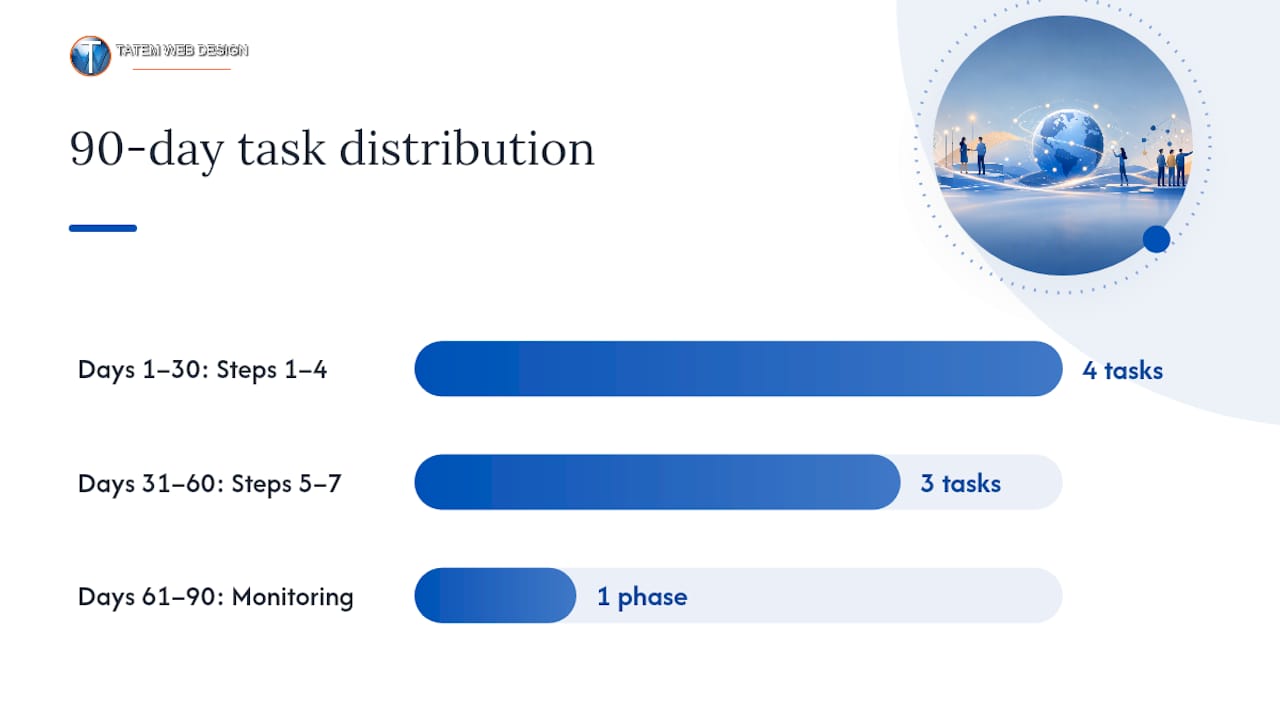
Prioritization for small budgets: Start with steps 1–4 in the first 30 days. They cost nothing but time and deliver fast local visibility gains. Move to steps 5–7 in days 31–60, then shift to monitoring and iteration in days 61–90.
Pro Tip: Leverage local partnerships and owned data to earn links faster. A co-authored article with a local chamber of commerce or a data study about your local market will earn more relevant links in 60 days than six months of cold outreach to national publications.
How off-page SEO shapes AI-driven search and entity recognition
Off-page signals help search and AI systems build and confirm entities, which directly improves your chances of appearing in AI-generated answers, knowledge panels, and voice search results. This is the fastest-evolving dimension of off-page SEO right now.
Practical implications for your strategy:
- Structured citations help entity resolution. When your business name, address, and category appear consistently across authoritative directories, AI systems can confidently resolve your brand as a known entity. Inconsistent data creates ambiguity that suppresses entity recognition.
- Consistent author credentials strengthen E-E-A-T. When your team members publish bylined content on authoritative sites, those author profiles become off-page signals that reinforce your brand’s expertise. A dentist who contributes to a dental association publication earns both a backlink and an entity signal.
- Unlinked brand mentions still help. AI systems trained on web text recognize brand mentions even without a hyperlink. A mention of your business in a local news article, a podcast transcript, or a forum thread contributes to entity recognition even if no link is present.
- Third-party reviews feed AI answer engines. When AI Overviews or Perplexity pull local business recommendations, they draw on review sentiment, GBP data, and citation consistency. A business with 80 recent, positive Google reviews and a complete GBP listing is far more likely to surface than one with sparse data.
Backlinko confirms that encouraging branded searches and increasing visibility on third-party platforms are now recognized off-page tactics, not just nice-to-haves. A brand that appears consistently across authoritative sources, directories, and social platforms gives AI systems the corroborating evidence they need to treat it as trustworthy.
What off-page SEO actually comes down to, from an agency perspective
Most marketers spend too much time chasing link counts and not enough time building the kind of external presence that compounds. The businesses that win at off-page SEO are not the ones with the most links. They are the ones whose brand appears in the right places, consistently, over time.
The single recommendation worth acting on today: prioritize reclaiming unlinked mentions and establish a steady cadence of guest contributions to publications your customers actually read. These two tactics require no budget, generate immediate goodwill with publishers, and produce compounding returns. Guest posting at 2–3 placements per month builds a referral traffic base that survives algorithm updates because it is not dependent on any single link.
Off-page SEO is not a campaign. It is a reputation-building practice that runs in parallel with everything else your business does online. The businesses that treat it that way, consistently and patiently, are the ones that dominate their local markets 18 months from now.
Tatemweb’s off-page SEO services for Florida businesses
Your off-page authority is only as strong as the strategy behind it. Tatemweb’s local SEO and digital marketing services give Florida businesses a done-for-you off-page program built around the tactics that actually move rankings: citation audits, Google Business Profile optimization, link-acquisition strategy, digital PR outreach, and review management.
An initial off-page audit from Tatemweb covers your full backlink profile, citation consistency across major US directories, GBP completeness, and a prioritized outreach plan tailored to your industry and service area. You get a clear picture of where your authority stands today and a concrete roadmap for the next 90 days.
Ready to build the external authority your site deserves? Call Tatemweb at 772-224-8118 or schedule a consultation to get your off-page audit started.
Sources
- What is off-page SEO? - Moz
- Off-Page SEO - Ahrefs
- Off-Page SEO: 6 Strategies & Tactics to Boost Your Reputation and Rank - HubSpot
- Off-Page SEO: The Complete Guide for 2026 - Backlinko
- Off-page SEO beyond backlinking for small businesses - DigitalSMB
- What is off-page SEO? - Yoast
FAQ
What is off-page SEO in simple terms?
Off-page SEO is everything you do outside your own website to build credibility with search engines, primarily earning backlinks, brand mentions, citations, and reviews that signal your site deserves to rank.
How is off-page SEO different from on-page SEO?
On-page SEO controls what your website says about itself (content, keywords, structure), while off-page SEO is what other sites and platforms say about you. Both are required for strong rankings; neither works well in isolation.
How many referring domains do top-ranking pages typically have?
Ahrefs data shows that over 90% of pages ranking in Google’s top 10 have at least one referring domain, and pages with more diverse referring domains consistently outrank those with fewer.
How long does it take to see results from off-page SEO?
Expect measurable signals such as new referring domains and modest ranking improvements in 3–6 months, with stronger authority gains visible in 6–18 months depending on industry competitiveness and outreach consistency.
Can Tatemweb help with off-page SEO for a Florida business?
Yes. Tatemweb provides off-page SEO audits and managed programs for Florida businesses, covering citation cleanup, Google Business Profile optimization, link-acquisition strategy, and review management. Call 772-224-8118 to schedule a consultation.
Recommended
Tatem Web Design
26+ YearsWeb Design & SEO Specialist · Tatem Web Design
Matt Tatem has been designing websites professionally since 1999, making Tatem Web Design one of Florida's longest-running web agencies. Based in Stuart, FL, he specializes in WordPress, local SEO, Shopify e-commerce, and cybersecurity consulting for small businesses.
What a CMMC Level 2 Assessment Requires and How to Prepare
Prepare for your CMMC Level 2 assessment by understanding requirements, assessment paths, and mapping your Controlled Unclassified Information.
A Data Retention Policy Is Your Rulebook for Keeping and Deleting Data
Establishing a clear data retention policy helps manage data risk, ensuring compliance and effective data management for your organization.
Law Firm Local SEO: A Practical Playbook for More Local Clients
Unlock more local clients for your law firm with effective local SEO strategies. Optimize your Google Business Profile and boost your visibility!