
Why Real Estate Websites Matter for Agents in 2026

A real estate website is the single most controllable asset in your digital marketing toolkit, and agents who treat it as optional are handing leads directly to competitors. 97% of homebuyers use the internet during their property search, with 43% starting their process online before ever contacting an agent. That number grew from 44% in 2001 to near-total saturation today. Understanding why real estate websites matter means understanding that your online presence is no longer a supplement to your business. It is your business’s front door, and you need to own it.
Why real estate websites matter for your long-term business
A dedicated real estate website is a durable, appreciating business asset in SEO terms. Unlike a brokerage profile or a portal listing, your own site accumulates search authority, content history, and lead data over time. Every blog post you publish, every property page you build, and every backlink you earn compounds in value the longer you own the domain.
Domain ownership is non-negotiable for long-term growth. Industry analysts consistently point to this because the SEO equity you build on a domain you control stays with you through every career change, market shift, and brokerage transition. That equity is yours. No one can take it away.
“A dedicated real estate website acts as a durable and appreciating business asset in SEO terms, unlike profiles or portals. Agents who own their domain retain SEO equity, lead history, and content authority regardless of brokerage changes.”
Your website also gives you complete control over your brand narrative. A brokerage subdomain forces your identity into a shared template. Your own site lets you define your specialty, your market, and your voice without restrictions. For Florida agents competing in markets like Stuart, Palm Beach, or Miami, that local differentiation is a direct competitive advantage.
Pro Tip: Register your domain under your personal name or a branded business name, not your brokerage’s name. This protects your SEO investment if you ever change firms.

The benefits of WordPress websites and other open-source CMS platforms are especially relevant here. These systems give you full ownership of your content, your database, and your design, with no vendor lock-in.
How does a real estate website generate and convert leads?
Lead generation is the most direct measure of a real estate website’s value. A well-built site does not just attract visitors. It captures them, qualifies them, and routes them into your sales process automatically.
The features that drive this outcome are specific and well-documented:
- IDX property search integration connects your site to the local MLS, letting visitors search active listings without leaving your domain. This keeps them engaged and positions you as the source of truth for local inventory. IDX integration is crucial in the US and Canada for property search functionality, and customization to your local MLS conditions is what separates a generic site from a high-performing one.
- Lead capture forms placed at key decision points, such as after a property search or on a neighborhood guide page, convert passive browsers into active prospects. Forms tied to a CRM mean no lead falls through the cracks.
- CRM integration automates follow-up so you respond fast. Agents who respond within 5 minutes are 21 times more likely to convert a lead than those who wait. The average agent response time is over 15 hours. That gap is where deals are lost.
- Hyper-local content pages targeting specific neighborhoods, school districts, or zip codes attract buyers and sellers who are already deep in the decision process. These visitors convert at higher rates than general traffic.
- Social proof elements including client testimonials, review widgets, and sold property galleries build trust before a prospect ever calls you. Social proof boosts conversions by 20%, and 70% of buyers cite online reviews as a factor when choosing an agent.
Stat: Top portals achieve over 5% conversion rates. The industry average for agent websites sits at 2%. The gap closes significantly when sites include IDX search, fast load times, and active lead capture tools.
Pro Tip: Connect your lead capture forms directly to an AI chatbot or automated email sequence. Tatemweb’s AI chatbot and lead capture tools can respond to new inquiries within seconds, keeping your response time competitive around the clock.
Does mobile optimization affect real estate website performance?
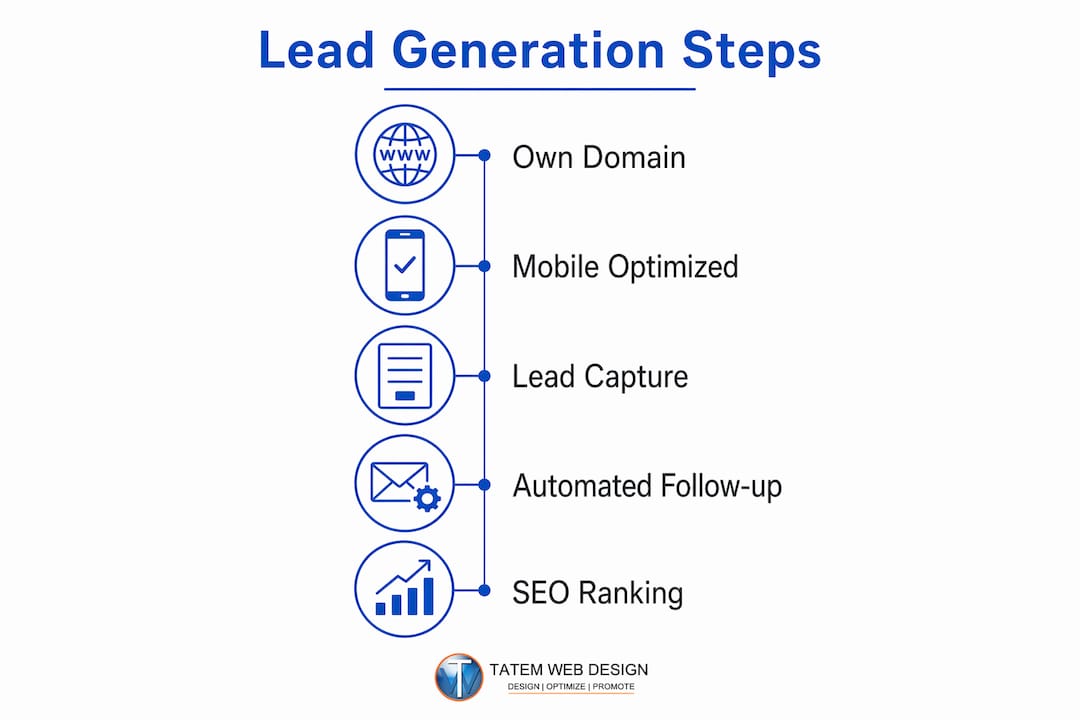
Mobile optimization is not a design preference. It is a performance requirement. 68% of real estate website traffic comes from mobile devices, which means the majority of your potential clients are viewing your site on a phone. If that experience is slow or broken, they leave.
Page load times under 3 seconds reduce bounce rates by 40%. Every second of delay costs you visitors who were already interested enough to click. For a real estate agent, a single lost lead can represent tens of thousands of dollars in commission.
What mobile UX best practices apply to real estate sites?
- Responsive design that automatically adjusts layout, font size, and image dimensions for any screen size. A fixed-width desktop layout viewed on a phone forces users to scroll sideways and pinch to zoom. They will not do it.
- Compressed, next-generation image formats like WebP for property photos. High-resolution images are non-negotiable in real estate, but unoptimized files destroy load speed. WebP delivers the same visual quality at a fraction of the file size.
- Tap-friendly navigation with buttons and links sized for thumbs, not mouse cursors. Small tap targets cause mis-clicks and frustration.
- Click-to-call buttons placed prominently on every page. Mobile visitors who are ready to act should be able to reach you in one tap.
- Simplified lead capture forms on mobile. Long forms with many fields see dramatically lower completion rates on phones. Ask for a name, email, and one qualifying question.
| Mobile factor | Impact on performance |
|---|---|
| Responsive design | Prevents layout breakage across all screen sizes |
| Load time under 3 seconds | Reduces bounce rate by 40% |
| Compressed property images | Maintains visual quality while cutting load time |
| Click-to-call buttons | Converts mobile intent into direct contact |
| Short lead capture forms | Increases form completion rates on small screens |
Mobile-first web design is the standard approach for any site built or rebuilt in 2026. Designing for the smallest screen first and scaling up ensures the experience works for the majority of your visitors, not just the minority on desktops.
Responsive web design also directly affects your Google search rankings. Google uses mobile-first indexing, meaning it evaluates the mobile version of your site when determining where you rank. A site that performs poorly on mobile ranks lower, period.
What are the pitfalls of relying on brokerage websites?
Brokerage-provided websites are the most common trap agents fall into, and the damage is not always visible until it is too late. The core problem is ownership. You do not own the domain, the content, or the lead data.
Relying solely on brokerage-provided websites causes a complete loss of SEO authority and leads when you change firms. Agents who move brokerages effectively restart their entire digital footprint. Years of content, backlinks, and search rankings disappear overnight. This is not a hypothetical risk. It happens to agents every day.
The specific pitfalls break down clearly:
- Shared domain authority. Your brokerage’s domain carries SEO signals for the entire company, not for you individually. You are one page among thousands, with no ability to build personal domain authority.
- No lead data ownership. Leads generated through a brokerage site belong to the brokerage, not to you. When you leave, that database stays behind.
- Template restrictions. Brokerage sites use shared templates that prevent you from differentiating your brand, targeting local keywords, or publishing the kind of hyper-local content that drives organic search traffic.
- Portal dependency. Listing portals drive traffic to their own brand, not yours. Buyers who find a property on a portal remember the portal, not the agent. You pay for visibility without building any lasting equity.
- Social media limitations. Social platforms are excellent for brand awareness, and social media correlates with a 20% higher lead conversion rate. But social profiles do not capture leads with the same precision as a website form tied to a CRM. Algorithm changes can cut your reach overnight.
The real estate website guide for Florida agents covers this ownership issue in detail, specifically for agents operating in competitive Florida markets where local SEO authority is a direct revenue driver.
Pro Tip: If you currently rely on a brokerage site, start building your own domain in parallel. You do not need to abandon your brokerage profile immediately. Build your owned asset alongside it, and let the SEO equity accumulate.
Key Takeaways
A real estate website is your most durable digital asset, and agents who own their domain, optimize for mobile, and build active lead capture systems consistently outperform those who rely on brokerage profiles or portals.
| Point | Details |
|---|---|
| Own your domain | Domain ownership retains SEO equity and lead data through every brokerage change. |
| Mobile performance is revenue | 68% of traffic is mobile; load times under 3 seconds cut bounce rates by 40%. |
| Lead capture requires the right tools | IDX search, CRM integration, and fast follow-up close the gap between visits and conversions. |
| Brokerage sites reset your progress | Leaving a brokerage erases your SEO history and lead database if you do not own the domain. |
| Speed of response wins deals | Agents who respond within 5 minutes are 21 times more likely to convert a lead. |
What I’ve learned from watching agents build the wrong foundation
Real estate agents are some of the most motivated professionals I work with. They put serious effort into their business. But a pattern I see repeatedly is agents investing years of energy into a digital presence they do not actually own.
The brokerage website feels like enough because it looks professional and has their name on it. The problem surfaces when they leave that brokerage, or when the brokerage changes its platform, or when the company gets acquired. Suddenly, every review, every indexed page, and every lead form they built is gone. They are starting from zero in a market where their competitors have been compounding SEO equity for years.
The agents who avoid this are the ones who treat their website the way they treat their license. It is a personal professional asset, not a company perk. They register their own domain, they publish content consistently, and they test their lead capture forms the same way they test their listing presentations.
The other thing I see agents underestimate is follow-up speed. A website can generate a strong lead, and then that lead goes cold because no one responded for 12 hours. The fix is not complicated. Automated email sequences and AI chatbots handle the first response instantly, keeping the conversation alive until you can follow up personally.
The AI-driven real estate web design approach addresses both problems at once. You get a site you own, built for speed and conversion, with automation handling the gap between inquiry and personal contact.
The agents who grow consistently are not necessarily the ones with the biggest marketing budgets. They are the ones who built on a foundation they control and then showed up consistently to maintain it.
— Matt
Tatemweb builds real estate websites that work for you
Real estate professionals in Florida need more than a template site. They need a website that generates leads, ranks in local search, and performs on every device their clients use.
Tatemweb has over 26 years of experience building websites for real estate agents and brokerages across Florida. The team specializes in AI-powered website design that combines mobile-first performance, IDX-ready architecture, and built-in lead capture tools. Every site is built on a domain you own, with SEO structure designed to compound in value over time. Whether you are starting from scratch or rebuilding a site that is not converting, Tatemweb delivers a real estate web design built specifically for the Florida market. Call 772-224-8118 to schedule a consultation.
FAQ
Why do real estate websites matter more than brokerage profiles?
A dedicated website builds SEO equity and lead data that you own permanently. Brokerage profiles reset your digital footprint every time you change firms.
What features does a real estate website need to generate leads?
IDX property search, CRM-connected lead capture forms, and fast mobile load times are the three features most directly tied to lead generation and conversion rates.
How much does mobile performance affect a real estate site?
68% of real estate website traffic comes from mobile devices, and sites that load in under 3 seconds see bounce rates drop by 40%, directly improving lead capture.
How quickly should agents respond to website leads?
Agents who respond within 5 minutes are 21 times more likely to convert a lead than those who wait. Automated responses via AI chatbots can cover the gap during off-hours.
Is social media a substitute for a real estate website?
Social media builds brand awareness and correlates with higher lead conversion rates, but it does not replace a website’s ability to capture, store, and own lead data through a CRM-integrated form.
Recommended
Tatem Web Design
26+ YearsWeb Design & SEO Specialist · Tatem Web Design
Matt Tatem has been designing websites professionally since 1999, making Tatem Web Design one of Florida's longest-running web agencies. Based in Stuart, FL, he specializes in WordPress, local SEO, Shopify e-commerce, and cybersecurity consulting for small businesses.

Rank in ChatGPT in 90 Days With a Practitioner Led Checklist
Follow a practitioner led 90 day plan to get cited by ChatGPT: allow OAI-SearchBot, publish short answer capsules with schema, and track Bing AI Performance.

AI SEO Content Playbook: 16 GEO Signals for Agencies & Teams
A practical playbook mapping the GEO-16 signals to hands-on editorial workflows, review controls, and metrics. For agencies and in-house teams scaling AI...

Copy Ready Local Schema Markup for SMBs + Google Validation
Copy ready JSON-LD examples and Google validation steps for SMBs' local schema markup. Audit, implement, and verify each location page with confidence.