
Cookieless Analytics: A Privacy-First Guide for U.S. Businesses
Cookieless analytics measures site traffic and conversions without setting persistent tracking cookies, making it a privacy-first alternative that works where cookie-based analytics increasingly fails. If you run a marketing site, a content publication, or a U.S. small business that wants accurate aggregate measurement without the consent friction, this approach is worth your serious attention.
The practical verdict: Use cookieless analytics as your primary measurement layer for marketing sites and landing pages. Keep user-level product analytics for logged-in experiences where a lawful first-party identifier already exists.
The businesses that benefit most are marketing-focused sites where aggregate channel and conversion data drives decisions, publishers who lose significant traffic to consent banner rejection, and SMBs in regulated industries like healthcare or legal services where minimizing data collection is both a compliance and a trust signal.
- Marketing sites and landing pages: Aggregate session and source data is usually sufficient for campaign decisions.
- Content publishers: Fewer consent prompts means more measured traffic and cleaner data.
- U.S. SMBs in regulated sectors: Less data collected means a smaller compliance surface.
- E-commerce sites: Cookieless works for top-of-funnel measurement; revenue attribution may need a hybrid server-side join.
Key Takeaways
Cookieless analytics gives U.S. marketing sites accurate aggregate measurement without persistent identifiers, making it the right default for most SMBs that want compliance-friendly data and fewer consent barriers.
| Point | Details |
|---|---|
| What you gain | Session-level accuracy, fewer consent barriers, and 15–35% more measured traffic than cookie-blocked tools. |
| What you trade away | Cross-day user stitching, multi-session funnels, and remarketing audience feeds are not available. |
| Compliance is not automatic | Hash and discard raw IPs server-side, set retention limits, and update your privacy policy to reflect actual data flows. |
| Hybrid strategy works best | Use cookieless for marketing sites and landing pages; use authenticated product analytics for logged-in user journeys. |
| Tatemweb implementation | Tatemweb configures privacy-first analytics, server-side tagging, and Consent Mode for Florida SMBs as part of AI website builds. |
Table of Contents
- What cookieless analytics is and why it emerged now
- How the main cookieless approaches actually work
- Benefits and real trade-offs you need to understand
- Common options and how they compare
- U.S. compliance checklist for cookieless analytics
- How to implement cookieless analytics step by step
- When cookieless analytics is not the right choice
- The honest case for cookieless as your default measurement layer
- Tatemweb can build and audit your privacy-first analytics setup
- Sources
- FAQ
What cookieless analytics is and why it emerged now
Cookieless analytics measures visits, traffic sources, and conversions using first-party signals or server-side hashing rather than writing third-party or persistent cookies to a visitor’s browser. The distinction matters because the cookie-based model that powered web analytics for two decades is under pressure from multiple directions at once.
Browser makers moved first. Safari’s Intelligent Tracking Prevention (ITP) began restricting third-party cookies in 2017. Firefox’s Enhanced Tracking Protection followed. Chrome announced its own deprecation timeline, though Google has since adjusted that schedule. Each change quietly eroded the accuracy of cookie-based analytics for a meaningful share of traffic.
The consent problem compounds the data problem. When a visitor declines your cookie banner, traditional analytics loses that session entirely. Cookieless architectures that avoid client-side storage often sidestep the consent requirement altogether, because nothing is written to the user’s device.
Legal pressure added urgency. GDPR and the ePrivacy Directive in Europe, followed by CCPA and CPRA in California and a growing wave of state privacy laws across the U.S., pushed businesses to reconsider what data they actually need to collect and store. The result was a category of tools built around a different premise: measure what matters without creating persistent identifiers.
The timeline looks roughly like this:
- 2017: Safari ITP restricts third-party cookies and limits first-party cookie lifespans.
- 2018: GDPR takes effect; consent banners proliferate across the web.
- 2020: CCPA goes live in California; Firefox ETP becomes the default.
- 2022: CPRA strengthens California rules; Google announces Privacy Sandbox.
- 2023–2024: Privacy-first analytics platforms gain significant market traction; GA4 replaces Universal Analytics.
- 2024: Google Consent Mode v2 becomes required for EU advertising measurement.
How the main cookieless approaches actually work
The most common privacy-first technique is daily-rotating server-side hashing. The server combines the visitor’s IP address, user-agent string, a site-specific secret, and the current date into a hash. That hash identifies a unique visitor within a single day but cannot link the same person across days, because the date component changes and the raw IP is discarded immediately after hashing.
This is meaningfully different from fingerprinting. Browser fingerprinting assembles a persistent profile from dozens of device signals and can track users across sessions and sites. The EFF has documented why fingerprinting remains legally and ethically risky, particularly under GDPR. Server-side hashing with daily rotation avoids that risk by design: the identifier is non-persistent and never leaves the server.
Other approaches exist along a spectrum:
- First-party localStorage or session IDs: A lightweight identifier stored in the browser for the session. More durable than a hash but still client-side, which means it may trigger consent requirements in some jurisdictions.
- Stateless server-side collection: No client-side storage at all. The server receives the request, computes a hash, records the event, and discards the raw IP. Nothing is written to the browser.
- GTM server-side containers: Google Tag Manager’s server-side mode routes tracking calls through your own server endpoint before forwarding to analytics platforms. This gives you control over what data leaves your infrastructure and lets you strip or mask identifiers before any third party sees them.
- Beacon API: A browser API that sends small analytics payloads to a server endpoint without blocking page load. Often used in privacy-first setups to send pageview events to a first-party endpoint.
The signals available in a cookieless setup include referrer, UTM parameters, page URL, user-agent, and coarse geolocation derived from IP before the IP is discarded. What is intentionally absent: persistent cross-session identifiers, device fingerprints, and any data stored in the user’s browser.
Pro Tip: To verify a tool is truly cookieless, open your browser’s DevTools Network tab and filter for the analytics request. Look for no Set-Cookie response headers and no writes to localStorage or sessionStorage. If you see either, the tool is using client-side storage regardless of its marketing claims.
Benefits and real trade-offs you need to understand
The benefits of privacy-focused analytics are concrete, not theoretical.
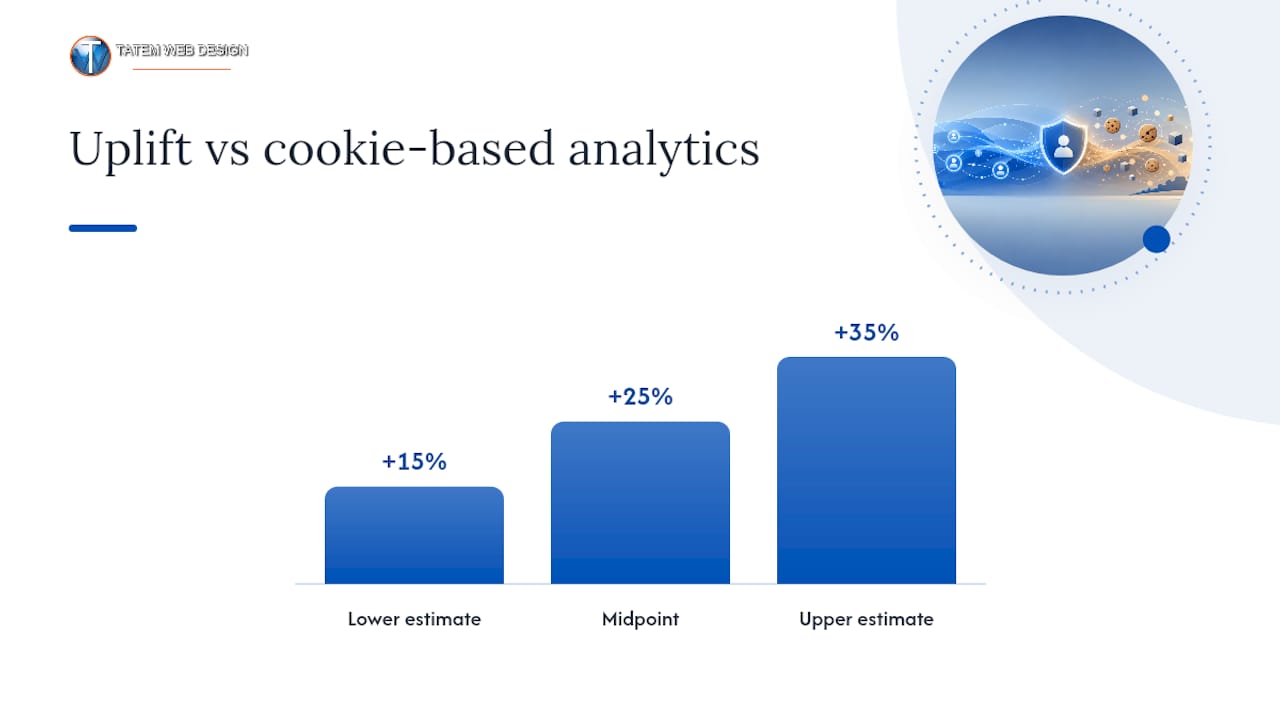
Cookieless tools frequently measure 15–35% more visits than cookie-based analytics on the same sites, because they are not blocked by ad blockers and not consent-gated. That gap represents real traffic your current analytics may be missing. Beyond raw counts, lighter scripts mean faster page loads, which affects both user experience and Core Web Vitals scores. And eliminating the analytics consent banner for a portion of your stack reduces the friction that causes some visitors to bounce before engaging.
The trade-offs are equally real and worth stating plainly.
- No cross-day user stitching: A visitor who returns tomorrow is counted as a new visitor. Monthly unique counts are approximations, and returning-user rates are not reliable.
- No multi-session funnels: You cannot trace a user’s path from first visit to conversion across multiple days without a persistent identifier.
- Attribution modeling limits: Google’s Consent Mode v2 fills gaps for non-consented users through modeling, but that modeling requires a sufficient consent rate to be statistically reliable. When consent rates fall too low, the modeled data becomes less trustworthy.
- No remarketing audiences: Cookieless analytics does not feed advertising platforms with user-level signals, so retargeting campaigns cannot be built from this data alone.
The honest framing is this: cookieless analytics trades deterministic user-level profiling for reliable aggregate accuracy. For most marketing decisions, knowing which channels drive sessions and which landing pages convert is enough. For product teams who need retention curves and cohort analysis, it is not.
Common options and how they compare
The market organizes into four practical categories. Each fits a different combination of privacy requirements, technical resources, and measurement goals.
Privacy-first cookieless SaaS platforms include tools like Plausible Analytics, Fathom Analytics, and Simple Analytics. These are hosted services that use server-side hashing and no client-side storage. Setup is a single script tag. They require no consent banner in most jurisdictions because nothing is stored in the user’s terminal equipment. Data granularity is session-level: you get pageviews, referrers, UTM sources, and top-level conversion events. You do not get cross-day user paths or funnel analysis across sessions. Pricing is typically a flat monthly fee based on pageview volume.
Self-hosted open-source options like Matomo give you full data ownership and the flexibility to configure cookie consent handling or disable cookies entirely. Matomo can run in a cookieless mode where it uses server-side session tracking without writing to the browser. The trade-off is maintenance: you manage the server, updates, and storage. Data granularity is higher than pure cookieless SaaS, and Matomo supports events, funnels, and goal tracking. Cost is infrastructure plus optional cloud hosting fees.
GA4 with Consent Mode is a hybrid approach. GA4 is not cookieless by default; it writes first-party cookies and collects user-level data. Consent Mode v2 degrades tracking for non-consented users and sends cookieless pings that Google uses to model behavior. This preserves some advertising measurement capability, which pure cookieless tools cannot match. The catch is that modeling quality depends on consent rates, and Consent Mode v2 is required for EU advertising use. For a deeper look at how GA4 fits into your measurement stack, the GA4 guide for businesses covers the practical setup decisions.
Server-side tagging via GTM server container is an architecture layer, not an analytics product. You route tracking calls through your own server, strip or mask personal identifiers, and forward clean data to your analytics platform of choice. This approach works with GA4, Plausible, or a custom endpoint. It gives you the most control over data flows and is the right choice when you need to join revenue data (from a payment processor like Stripe) to analytics events without exposing personal data to client-side scripts.
| Option | Consent needed? | Data granularity | Events/funnels | Setup effort | Pricing model |
|---|---|---|---|---|---|
| Plausible / Fathom / Simple Analytics | Usually no | Session-level | Basic events only | Low (one script) | Flat monthly SaaS |
| Matomo (cookieless mode) | Configurable | Session + event | Full funnel support | Medium (self-hosted) | Free + hosting costs |
| GA4 + Consent Mode | Yes (EU required) | User-level with modeling | Full GA4 feature set | Medium to high | Free (data costs) |
| GTM server-side + any platform | Depends on platform | Depends on platform | Depends on platform | High | Infrastructure costs |
U.S. compliance checklist for cookieless analytics
“Cookieless” does not mean “automatically compliant.” That distinction matters for any U.S. business processing visitor data.
Under CCPA and CPRA, the key question is whether you are collecting personal information. An IP address is personal information under California law. If your cookieless setup processes raw IPs, even briefly, you are collecting personal data and need to address it in your privacy policy and data practices. The good news: if you hash and discard the IP server-side before any storage occurs, the retained hash is generally not linkable to an individual and may fall outside the personal information definition.

State privacy laws beyond California are expanding. Virginia (VCDPA), Colorado (CPA), Connecticut (CTDPA), and Texas (TDPSA) all have active frameworks. Most follow a notice-and-opt-out model for analytics rather than requiring opt-in consent, but the specifics vary by data category and use case. If you process data from EU visitors, GDPR and the ePrivacy Directive still apply to that processing regardless of where your business is located, and a Data Protection Impact Assessment (DPIA) may be required.
Practical compliance controls:
- Hash and discard raw IPs at the edge or server before any storage.
- Use daily-rotating salts so hashes cannot be reverse-engineered or linked across days.
- Set data retention limits in your analytics platform (30–90 days for aggregate data is common).
- Document your lawful basis for any processing that involves identifiers.
- If you use a tag manager, map each tag to its legal basis and keep that mapping current.
Implementation checklist:
- Audit your current tag inventory and identify which tags write cookies or collect personal data.
- Decide whether to use a Consent Management Platform (CMP) for the tags that still need consent, or eliminate those tags.
- Configure your cookieless analytics tool to hash IPs server-side and confirm no
Set-Cookieheaders are returned. - Update your privacy policy to reflect the new data flows, including what is collected, how long it is retained, and whether any third parties receive it.
- If you process EU visitor data, document your legal basis and assess whether a DPIA is needed.
- Establish an audit trail: log configuration changes to your tag manager and analytics setup so you can demonstrate compliance controls.
For businesses that need formal documentation of data handling controls, the AICPA’s SOC resources describe audit frameworks that some organizations use to demonstrate operational controls over data processing.
How to implement cookieless analytics step by step
Implementation breaks into three tracks: engineering controls, marketing configuration, and quality assurance. Running them in parallel shortens the validation period.
Engineering track:
- Select your architecture: pure cookieless SaaS, self-hosted Matomo in cookieless mode, or GTM server-side with a privacy-first endpoint.
- Deploy the analytics snippet or configure your server endpoint. For server-side setups, point your GTM server container to a subdomain you control (e.g.,
analytics.yourdomain.com). - Confirm no
Set-Cookieheaders are returned by the analytics endpoint. Use DevTools or a tool like Fiddler to verify. - Implement daily-salt hashing: combine IP + user-agent + site secret + date, compute the hash, then discard the raw IP immediately. Rotate the salt daily.
- If joining revenue data, send conversion events from your server (Stripe webhook → your server → analytics endpoint) without passing personal identifiers to the client-side layer.
Marketing configuration track:
- Define conversion events before launch: form submissions, phone clicks, checkout completions. Consistent definitions make cross-tool comparison valid.
- Set up UTM parameter tracking and confirm your cookieless tool captures source, medium, and campaign correctly.
- If running paid advertising, configure Consent Mode v2 for EU traffic and document the consent rate threshold you need for modeling to be reliable.
Quality assurance track:
- Run your cookieless analytics in parallel with your existing tool for at least two to four weeks before switching over.
- Compare pageview totals, top traffic sources, and conversion counts between the two systems. A 15–35% higher count in the cookieless tool is expected and normal.
- Document the delta and communicate it to stakeholders so no one interprets the difference as a data error.
Pro Tip: Set a calendar reminder to check your consent rate monthly if you use Consent Mode. Modeling degrades when consent rates drop, and a sudden drop in consent rates often signals a CMP configuration change or a new browser default that needs attention.
Pro Tip: For Florida businesses in healthcare or legal services, run your cookieless implementation past your compliance counsel before go-live. The technical setup may be clean, but your privacy policy and BAA (if applicable under HIPAA) need to reflect the new data flows.
When cookieless analytics is not the right choice
Cookieless analytics is the right default for marketing measurement. It is the wrong choice when your business decisions depend on data that requires persistent user-level identifiers.
- SaaS product analytics: If you need to know that a specific user completed onboarding, returned on day 7, and upgraded on day 30, you need a persistent identifier tied to their account. Cookieless hashing cannot reconstruct that path.
- In-app user journeys: Mobile apps and logged-in web products need session continuity across days. Tools like Mixpanel or Amplitude are built for this use case and rely on authenticated user IDs, not anonymous hashes.
- Personalized recommendation systems: Serving personalized content or product recommendations requires knowing something persistent about the visitor. Aggregate cookieless data cannot power this.
- Long-term retention and cohort analysis: Measuring 30-day or 90-day retention requires linking visits across time. Without cross-day user stitching, retention curves are not available.
The practical answer for most businesses is a hybrid strategy. Use a privacy-first cookieless tool for your marketing site, landing pages, and top-of-funnel measurement. Use authenticated product analytics for logged-in users where you have a clear lawful basis and a user agreement that covers the data collection. The two layers serve different purposes and do not need to be the same tool.
For professional services firms evaluating this split, the professional services website guide covers how measurement priorities differ by business type and what the right analytics setup looks like for client-acquisition-focused sites.
The honest case for cookieless as your default measurement layer
Most U.S. SMBs running marketing sites are over-engineered on analytics and under-engineered on data quality. They have GA4 collecting user-level data they never analyze, consent banners that reduce measured traffic, and attribution reports that are increasingly unreliable as cookie support erodes. The result is a lot of data that does not actually drive better decisions.
The shift to privacy-first cookieless measurement is not a downgrade. It is a recalibration toward the metrics that actually matter for marketing: which channels bring visitors, which pages convert, and which campaigns produce revenue. Aggregate session data answers those questions reliably. Cross-day user paths, for most marketing sites, do not add decision-making value that justifies the compliance complexity.
Where server-side tagging earns its complexity cost is in two specific situations: when you need to join revenue data to sessions without exposing payment identifiers to client-side scripts, and when you are running significant paid advertising spend that requires Consent Mode modeling to preserve attribution. Both are legitimate reasons to invest in a more sophisticated architecture. Both are also situations where hiring an agency with implementation experience pays for itself quickly, because the configuration errors in server-side setups are subtle and their compliance consequences are not.
Tatemweb can build and audit your privacy-first analytics setup
Getting cookieless analytics right is a technical and legal exercise, not just a tool swap. Tatemweb’s team handles the full implementation: selecting the right architecture for your site, configuring server-side tagging or a privacy-first SaaS platform, verifying that no personal identifiers leak to client-side scripts, and documenting the data flows your privacy policy needs to reflect.
For Florida businesses in healthcare, legal, or financial services, that documentation matters as much as the technical setup. Tatemweb’s AI website design and implementation services include analytics configuration as part of every build, and the team can audit an existing setup for compliance gaps and measurement accuracy. If you are running paid advertising and need Consent Mode properly configured alongside a cookieless layer, the AI services team handles that integration as well. Call 772-224-8118 to schedule a discovery call and get a clear picture of what your current analytics setup is missing.
Sources
- What Is Cookieless Analytics? How It Works | Attrifast
- What Is Cookieless Analytics and How Does It Work? | Sleek Analytics
- Cookieless Analytics: How It Works and Why You Need It — DataSaaS
- GDPR and browser fingerprinting — EFF
This article is general information, not a substitute for advice from a qualified lawyer. Consult a qualified legal professional about your own circumstances before acting on anything here.
FAQ
What is cookieless analytics?
Cookieless analytics measures website visits, traffic sources, and conversions without writing persistent cookies to a visitor’s browser. It typically uses server-side hashing of signals like IP address and user-agent, discarding the raw data after computing a daily non-persistent identifier.
Are tracking cookies illegal?
Tracking cookies are not illegal in the U.S., but they trigger consent and disclosure requirements under CCPA/CPRA in California and similar state privacy laws. In the EU, the ePrivacy Directive requires informed consent before setting non-essential cookies.
Can you use Google Analytics without cookies?
GA4 uses first-party cookies by default, but you can configure it with Consent Mode v2 to send cookieless pings for non-consented users. Those pings feed Google’s behavioral modeling, though modeling accuracy depends on maintaining a sufficient consent rate from the consented portion of your traffic.
Is Google going cookieless?
Google has not eliminated cookies from Chrome. After several delayed timelines, Google shifted its Privacy Sandbox approach to give users browser-level controls rather than removing third-party cookies entirely. GA4 still relies on first-party cookies for user-level measurement, making Consent Mode and server-side configurations the practical path for privacy-compliant measurement.
How do third-party cookies track you?
Third-party cookies are set by a domain other than the site you are visiting, typically an ad network or analytics provider. They persist in your browser and allow that third party to recognize you across different websites, building a profile of your browsing behavior over time.
Recommended
Tatem Web Design
26+ YearsWeb Design & SEO Specialist · Tatem Web Design
Matt Tatem has been designing websites professionally since 1999, making Tatem Web Design one of Florida's longest-running web agencies. Based in Stuart, FL, he specializes in WordPress, local SEO, Shopify e-commerce, and cybersecurity consulting for small businesses.

What a CMMC Level 2 Assessment Requires and How to Prepare
Prepare for your CMMC Level 2 assessment by understanding requirements, assessment paths, and mapping your Controlled Unclassified Information.

A Data Retention Policy Is Your Rulebook for Keeping and Deleting Data
Establishing a clear data retention policy helps manage data risk, ensuring compliance and effective data management for your organization.

Law Firm Local SEO: A Practical Playbook for More Local Clients
Unlock more local clients for your law firm with effective local SEO strategies. Optimize your Google Business Profile and boost your visibility!